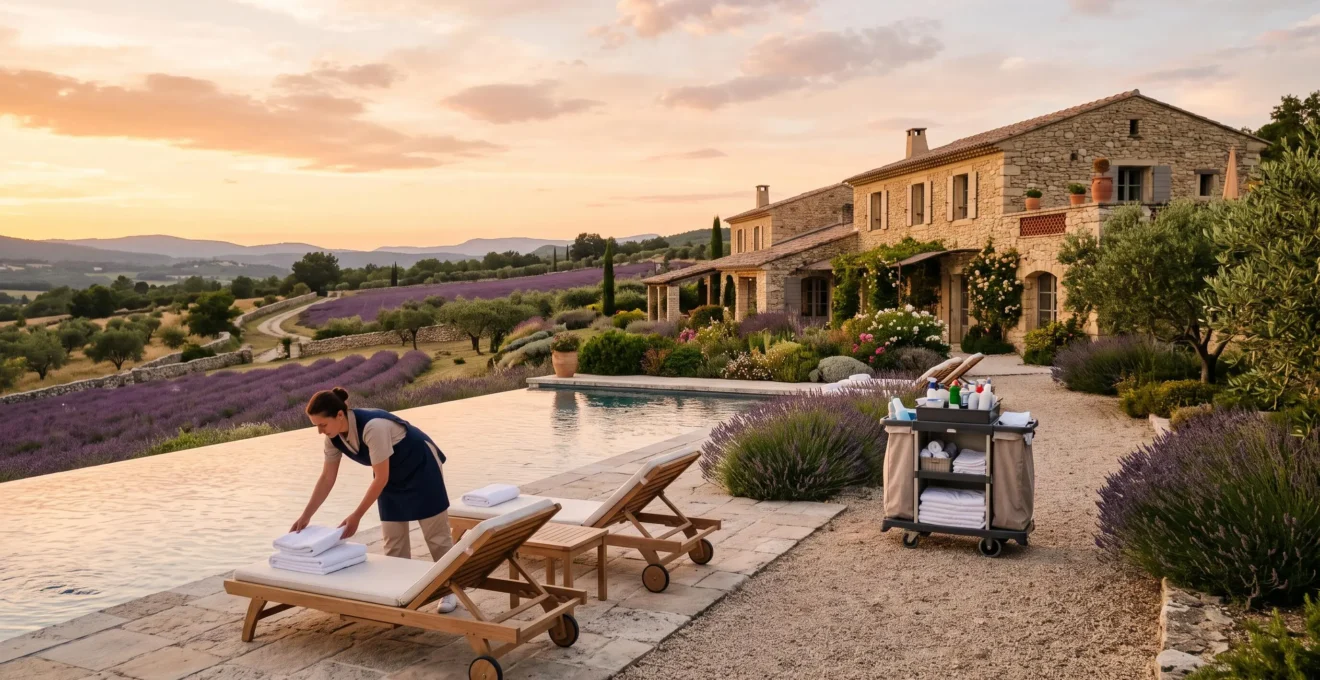
Direct answer: Private villas are reshaping luxury holidays in France because they can deliver what many five-star hotels cannot always guarantee at the same time: total privacy, more space, and customisable services (chef, housekeeping, concierge) in a setting that feels truly “yours” for the duration of the stay. The trade-off is that reliability depends less on a global brand and more on the quality of the contract, the manager, and the service setup you verify before booking.
If you are weighing a private villa in France against a palace-style hotel, your decision usually comes down to three practical questions: Do you need discretion? Are you travelling as a couple versus a group? And do you want your days to run on your schedule rather than a hotel’s routines?
This article helps you compare villas vs luxury hotels criterion by criterion, with concrete stay scenarios and a decision grid you can use immediately—even if you are unfamiliar with France’s short-term rental landscape (which has its own rules and paperwork).
What to check before choosing a villa over a five-star hotel
- Privacy & space: villas minimise shared areas; hotels excel at on-site facilities.
- Service model: villas can be highly personalised, but you must confirm what is staffed vs “on request”.
- Value for groups: villas can make sense when costs are shared across several bedrooms.
- Reliability signals: contract clarity, professional management, documented inventories, and recent reviews matter more than décor.
- Region fit: Provence, the Côte d’Azur, and rural estates offer very different luxury experiences—and seasonality.
What Defines a Private Villa in the French Luxury Market?
A private villa in the luxury segment typically means you rent the entire property for exclusive use—house, outdoor areas, and amenities—rather than a unit inside a shared building. In practice, what makes it “luxury” is not a star rating (as in hotels), but the combination of space, privacy, and service options you can secure for your dates.
Compared with a five-star hotel, the most tangible difference is operational: a villa has no shared lobby, no public restaurant, no fixed breakfast hours. Your day can start late, meals can happen by the pool, and staff presence can be discreet—if it is organised that way.
In France, many villas are offered as short-term furnished tourist rentals (meublés de tourisme). Rules can affect registration and what is required from the owner or manager. France is also moving toward more harmonised oversight: according to the French Ministry for Ecological Transition, an EU regulation on short-term rentals will fully apply in May 2026, and registration will be generalised across the territory from mid-2026 (La location touristique meublée (Ministère de la Transition écologique)).
What does “exclusive use” change day to day?
It changes the feel of luxury from “access” (spa, bar, restaurant downstairs) to “control” (who you see, when staff enters, what the soundtrack is, when the table is set). If discretion is part of your definition of luxury, that difference is immediate.
How does a villa compare with a hotel suite for a week?
Imagine a hypothetical week in Provence. In a luxury hotel, you may book a suite with excellent service and facilities—yet you still share corridors, breakfast rooms, and peak-time check-in rhythms. In a villa, you trade those facilities for private outdoor space, multiple living areas, and the option to organise a chef night or daily housekeeping on your own timing.
The key is to treat the villa as a “private residence with services” rather than as a hotel replacement. Your experience will be outstanding if services are clearly defined—and frustrating if you assume hotel-style coverage without confirming what is included.

Why Are Travelers Turning Away from Five-Star Hotels?
Luxury travellers do not necessarily “turn away” from five-star hotels across the board—many stays still suit them perfectly. What changes is that, for certain trips, a private villa in France matches the brief more precisely: discretion, flexibility, and togetherness without the friction of shared spaces.
Privacy: the simplest reason, and the hardest for hotels to replicate
Hotels can offer privacy inside a suite, but they cannot remove shared entrances, lifts, breakfast rooms, or pool decks. A villa can. If you value quiet mornings, low visibility, and a “no audience” feeling, a villa is structurally better suited—without implying it is automatically better managed.
Personalised service: what you can request (and what you must confirm)
In a high-end villa stay, “personalisation” often means you can shape staffing and routines: chef dinners, daily housekeeping, pre-stocked groceries, transfers, or a concierge arranging experiences. Unlike a hotel, these services may be included, optional, or handled by external partners, so your task is to get everything written down before you pay.
Villa vs luxury hotel: hotels are consistent because services are standardised; villas can feel more personal because services are built around you, but reliability depends on the operator’s execution and your clarity on scope.
Space and flexibility for families and groups
If you travel with children, friends, or multiple generations, the value of a villa is often basic comfort: separate bedrooms, multiple bathrooms, indoor-outdoor living, and the ability to gather without booking several hotel rooms on different floors.
Cas pratique
Hypothetical example: a family of six plans a week on the Côte d’Azur. In a five-star hotel, they may need two or three rooms (plus connecting-room availability), and shared areas set the atmosphere. In a private villa, they can sleep under one roof, eat together at a single table, and schedule housekeeping around nap times. The villa can feel like better “value” if the group shares the cost—but only if the contract clearly states what is staffed, what is on request, and what adds extra fees.
Answer to the common objection “Are villas worth it?” They can be—especially for groups—because you pay for exclusive space rather than multiple room keys. But a hotel may still win on predictable service depth (24/7 reception, on-site restaurants, maintenance teams) without you coordinating anything.
boutique stays can be a useful third option if you want character and intimacy, but do not need full private-use space.
The Regions Driving the Private Villa Boom
France offers very different “villa experiences” depending on region. Your best choice is less about a generic ranking and more about matching your travel profile—beach-centric, wine-and-villages, or countryside seclusion—to the right geography and season.
One reason villas receive attention is that tourism demand remains strong overall. France recorded 835 million nights in commercial and non-commercial accommodation in 2025, according to Atout France, with French nights in tourist rentals up 6.6% that year (bilan touristique France 2025). This does not prove a “luxury villa boom” on its own, but it does show that rental formats are an important part of how people stay in France.
Provence and the Côte d’Azur: climate, scenery, and high season intensity
Provence tends to attract travellers who want markets, vineyards, hilltop villages, and a slower rhythm—often with outdoor dining and pool days as the backbone of the stay. The Côte d’Azur is typically more about coastline access, beach clubs, and being close to a dense calendar of summer activity.
Villa vs luxury hotel: hotels can be unbeatable for walkable, central positioning in busy coastal towns. Villas often excel when you prioritise private outdoor space and a quieter base, accepting that you may rely more on drivers or pre-planned logistics.
Dordogne and rural France: estates, space, and a “house-party” style of luxury
For travellers who define luxury as time, space, and privacy, the countryside can offer larger properties and a more “estate” feel. The Dordogne is often associated with gastronomy, markets, and heritage sites—well suited to villa stays where the house itself becomes the centre of the trip.
Seasonality also feels different: a countryside villa can be attractive outside peak summer if the property has the right indoor comfort, while coastal demand tends to spike hard in summer weeks.
A note on “market hot spots” and what it does (and doesn’t) tell you
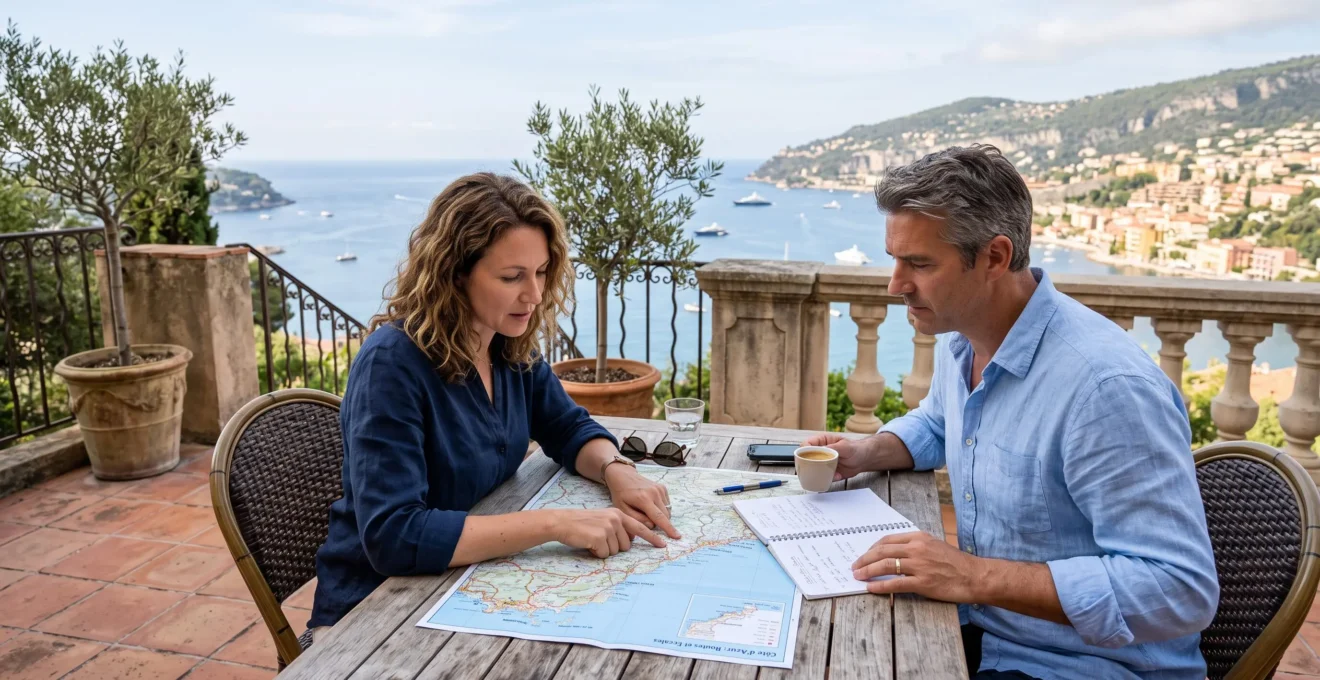
Sector analyses can help you understand where demand concentrates, but they are not booking advice by themselves. For example, a 2026 market overview describes demand for luxury villas as concentrated in four main poles (including the Côte d’Azur and the Alps), each associated with distinct client profiles (zones dynamiques du marché villa de luxe). Use that as orientation, then decide based on your itinerary, privacy needs, and service expectations.
How to Choose the Right Private Villa for Your Stay
The safest way to book a luxury villa is to treat it like a high-value private rental: you validate location reality, contract terms, and service logistics—then you compare that package with what a five-star hotel would deliver for the same dates.
Below is a practical checklist you can apply whether you book direct, via an agency, or through a managed portfolio.
- Map the location to your daily plan
Confirm driving times to beaches, villages, or meeting points, and ask about access constraints (narrow roads, parking, stairs). In a hotel, location is usually straightforward; with villas, “near” can mean very different things.
- Ask what is truly included vs optional
Clarify housekeeping frequency, linen changes, pool/garden maintenance, and whether a concierge is dedicated or “on request”. A five-star hotel has baseline daily service; villas vary widely.
- Read the rental contract like a service specification
Check cancellation rules, security deposit terms, check-in/out windows, and liability clauses. If anything is unclear, request written clarification before paying.
- Look for professional management signals
Recent reviews, documented inventories, emergency contacts, and clear escalation paths matter. Hotels have a reception desk by default; villas need an equivalent process.
- Confirm compliance steps when relevant
Because furnished tourist rentals are regulated and evolving, ask the operator what registration/administrative steps apply to the property and how they handle them, in line with official guidance from the French Ministry for Ecological Transition (noted earlier).
Reliability pitfall to avoid: A beautiful photo set is not proof of service quality. For a villa rental with concierge service, insist on a written list of services, response times (if stated), and who delivers them.
When your main doubt is “hotel-grade reliability,” compare the villa’s operational setup to what a hotel brand standardises: staffing coverage, maintenance response, and guest support. If the villa cannot explain those basics clearly, you are not comparing “villa vs luxury hotel” anymore—you are comparing certainty vs uncertainty.
| Decision criterion | Private villa | Five-star hotel |
|---|---|---|
| Privacy & shared spaces | Exclusive-use property; minimal shared exposure | Private room, but shared public areas remain |
| Space for groups | Multiple bedrooms and living areas under one roof | Often requires multiple rooms/suites |
| Service model | Customisable; must be confirmed in writing | Standardised and predictable day-to-day |
| Facilities (spa, gym, bars) | Varies by property; may be limited | Usually on-site and easy to access |
| Operational safety net | Depends on manager and processes you verify | Front desk and maintenance teams are built-in |
Planning Your Next Luxury Escape in France
Planning a luxury villa stay works best when you plan backwards from your peak constraints: school holidays, festival weeks on the coast, and the weather window you want. Hotels can sometimes absorb late changes through room inventory; villas are singular assets—if the house is booked, it is gone.
What booking timeline works best for high-demand weeks?
For peak summer on the Côte d’Azur or prime weeks in Provence, start your shortlisting early enough to compare contracts and service packages calmly. If you are booking shoulder season, you may have more options, but you still benefit from time to organise staffing and experiences.
How should you think about budget and “value”?
A villa budget is usually not just the nightly rate. You may have add-ons such as extra housekeeping, private chef evenings, chauffeured transfers, or pre-stocking. Hotels often bundle more of this into the room price, while villas itemise—so value depends on what you will actually use.
Which services should you coordinate in advance?
If you want the stay to feel seamless, pre-arrange the essentials: airport transfers, first grocery delivery, and any chef or concierge support for key nights. Your goal is to avoid “administrative friction” once you arrive—the main reason travellers pay for luxury in the first place.

A simple decision grid: match traveller profile, region, and service expectations
- If discretion and quiet mornings are non-negotiable:
Prioritise a private villa, then validate staffing, house rules, and on-call support in the contract.
- If you want facilities on your doorstep (spa, bars, room service at any time):
A five-star hotel is often the more reliable fit, especially for short stays.
- If you travel with family or friends and plan to spend time together at “home”:
A villa can offer better comfort density—provided you confirm bedroom layouts, bathrooms, and housekeeping frequency.
- If you are region-hopping every two or three days:
Hotels reduce logistics; villas shine when you stay put and let the property become the base.
Is a private villa better value than a luxury hotel for a family stay in France?
It can be, mainly when the cost is shared across several bedrooms and you will actually use the space (pool time, shared meals, downtime at the property). A five-star hotel may offer stronger built-in reliability and facilities, but it often requires multiple rooms and brings shared areas you cannot opt out of.
How to check rental regulations and contracts before booking a villa in France?
Start with the contract: cancellation, deposit, inventory, check-in/out process, and who provides guest support on site. On regulation, use official administrative guidance—France’s Ministry for Ecological Transition explains the framework for furnished tourist rentals and notes upcoming changes tied to EU rules and broader registration from mid-2026 (mentioned earlier in this article). If your operator cannot explain how the property is managed within that framework, ask for clarification in writing.
Which concierge services should a luxury villa in Provence include?
There is no universal “included” list, so treat this as a specification exercise. Many travellers look for at least: clear key handover and on-call support, housekeeping plan, help booking a private chef or prepared meals, and coordination of transfers and local experiences. The crucial point is to confirm what is staffed on site versus arranged through partners, and what triggers extra charges.
If you want the most confidence from a high-budget stay, compare each option on what you can verify: privacy and space (villa), facilities and standardised service (hotel), and the exact written scope of concierge services (either one). Once you do that, choosing a private villa in France stops being a leap of faith and becomes a structured decision.